

Faith
The Christian vocation -- initiated at baptism, strengthened by confirmation, and nourished each week by the Eucharist -- is challenging.
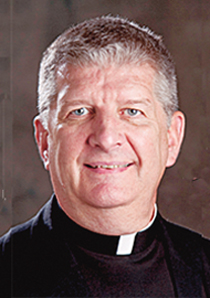
Father Robert M.
O'Grady
O'Grady
As schools and colleges start to reopen and parishes begin religious education programs for children, youth, and adults, a few columns on liturgical formation seem to fit the schedule.
Over the past several weeks, Pope Leo XIV has been delivering his weekly catechesis on the Second Vatican Council's first promulgated document, "Sacrosanctum Concilium." The first document addressed, for the most part in broad terms, the Council Fathers' design for the renewal, restoration, and renovation of the Church's entire prayer life.
The existence of the Church is precisely to offer praise and thanksgiving, glory and honor to the Father, through the Son, with the Holy Spirit, in the Church. This is the foundation of the Church's missionary essence.
Through the seven talks so far, there are some recurring themes. One is liturgical formation. Using some of his threads and other documents on liturgical formation, I will try, in the next few columns, to echo his call to the constant need for this formation on the part of all of us, members of the Church.
Let's look at the word "formation." Here is one dictionary citation:
"1: an act of giving form or shape to something or of taking form; e.g., the formation of the planets; 2: something that is formed, e.g., new word formations, a rock formation; 3: the way a thing is formed, e.g., the peculiar formation of the heart; 4: a major kind of plant growth, e.g., forest, grassland, or tundra; 5 a) any igneous, sedimentary, or metamorphic rock represented as a unit; b) any sedimentary bed or consecutive series of beds sufficiently homogeneous or distinctive to be a unit; 6: an arrangement of a body or group of persons or things in some prescribed manner or for a particular purpose."
Numbers 1, 2, 3, and 6 relate to formation in the Church in a broad sense.
Formation also involves information or data, education and attentive listening, but it is not simply one or the other of these.
As the dictionary definition shows, it can mean different things at different times and in different situations.
For instance, Roman Catholic seminaries, which prepare candidates for ordination as priests, are involved in formation. They tell us it has four pillars: human, spiritual, intellectual, and pastoral. The seminary program must assist in the fourfold formation of the seminarians.
Parents form their children; teachers, their students; coaches, their teams; there is formation going on all the time. And all of us have experienced it during our lives. Sometimes it's intentional -- in the classroom, at home, in church. Sometimes it's unintentional -- in the schoolyard, on television, or in church. We might be pro, con, or neutral towards it when it's intentional, or happily oblivious when it's not. Usually, it involves someone who is consciously forming -- a parent, teacher, or pastor -- or one who forms by word and example, which may be good, bad, or neutral. There is a lot of it happening to many people, in many places.
"Liturgical" refers to the public, common, structured, and celebrated rites of a church, synagogue or temple.
Liturgical formation may be described as the shaping of communities and individuals through the communities by their presence, participation, listening, responding, moving, and involvement in a structured worship or rite. It may also include an explanation, a study, or courses and academic degrees related to the rites.
Ideally, it involves all of this according to the capacity and interest of each member of a community of faith; usually, this means starting in a parish.
For Roman Catholics, the real first school of the faith is participation in the life of the Church, and specifically, the sacramental life. In this, the Mass is primary. Indeed, presence and participation at Sunday Mass throughout our lives is the primary means by which we are formed into the Body of Christ.
The weekly cycle of prayer and scriptural texts, which lead to the liturgy of the Eucharist, constitute the Mass, and it has the power to shape and form us, slowly and surely, with leaps and falls, into the image of Christ and to impel us to love and service.
The Christian vocation -- initiated at baptism, strengthened by confirmation, and nourished each week by the Eucharist -- is challenging. Christ knew this, and he himself took time to form his own disciples, fitting and shaping them for the challenge of the Christian life. He did this by word and command and example. He formed them to pray, to preach, to serve. He continues to shape us, his disciples, in these same ways -- by his Word, preaching, and sacraments.
Pope St. Leo the Great consolingly reminds us that Christ continues to form us as he did his disciples, now through the sacraments: "Since the Lord is no longer visible among us, everything that was visible in him has passed into the sacraments."
Help us expand our reach! Please share this article on social media

Recent articles in the Faith & Family section
-

How I use AI (and how I don't)Sister Hosea Rupprecht
-

Getting on a calendar -- Be a saint firstFather Robert M. O'Grady
-

The Golden RuleArchbishop Richard G. Henning
-

World Mission SundayMaureen Crowley Heil
-

Dressing for the feastScott Hahn


