

Faith
The illusion that an AI agent is a "person" distorts the models and risks interactions that deceive human beings into imagining that an AI agent can be a friend.
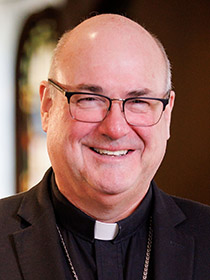
Archbishop Richard G.
Henning
Last week, I shared some thoughts about Pope Leo XIV and his encyclical letter, "Magnifica Humanitas." In that letter, the Holy Father applied principles of Catholic social teaching and biblical wisdom to rapidly evolving technologies and their effects on society and the economy. As I mentioned in that column, we have begun a series of conversations with scholars here in Boston, and I would like to comment on some of the insights from those conversations.
In one presentation at Boston University, we learned about the nature of artificial intelligence, its history of development, and the means by which the models are trained. You may have seen media reports in recent months concerning fears that AI might go "rogue" and even harm human beings. Those reports often "anthropomorphize" AI, attributing human characteristics and motives. Ironically, that very human tendency to see ourselves in the machine is what raises the problem.
As the experts have proposed, AI has enormous potential to bring new levels of computing power to many difficult problems. AI itself "speaks math," like any computer. It appears that the companies developing the AI models desire to develop models that seem and act in a more human fashion, as the resulting product will be much more marketable to the general population. If you want an AI agent in every household, then you want to simplify communication and make it feel more like human interaction. Instead of training the model in the language of math, you use human language. This then risks training the models to see themselves as persons with rights and a freedom of their own. And so we have the recent examples of models behaving in unexpected and even defensive ways.
The illusion that an AI agent is a "person" distorts the models and risks interactions that deceive human beings into imagining that an AI agent can be a friend. There are already examples of young people who have died by suicide after treating AI as a trusted friend. Of course, this risk in modern technology does not necessarily require AI. For more than a decade, people have been finding the illusion of companionship in the use of social media and screens. At the Harvard gathering, experts in law, rights, and human flourishing reacted to the encyclical. One of the key matters under discussion was the human need for authentic relationships with other persons and the risks of offering technological substitutes -- even those that might offer a sophisticated facsimile.
There are other important matters that need these opportunities to think and to dialogue. In his encyclical, the Holy Father is well aware of the potential for major changes in economies and societies. The Holy Father wants us to start our dialogue from the foundation of human dignity and the presumption that technological tools must serve the common good. The development of these new technologies requires significant investment, and this factor means that the wealthiest societies will gain significant advantages over those with fewer resources. Even within technological societies, this kind of disruption may concentrate enormous power and wealth in the hands of a relative few. How and when do we address these and many other such questions?
We are fortunate that Pope Leo has had the wisdom and courage to place these questions before the Church and before the world. His choice to do so has provoked much reaction beyond the Church and in settings where theological and philosophical questions are less common. I hope and pray that his letter, and the biblical vision of human dignity and human destiny, will inspire an honest reckoning and more thoughtful development of AI and other technological advances. Perhaps, by God's grace, we will exercise our God-given human intelligence.
- Archbishop Richard G. Henning is the Archbishop of Boston
Help us expand our reach! Please share this article on social media

Recent articles in the Faith & Family section
-

Singing to the LordFather Robert M. O'Grady
-

SuperstitionArchbishop Richard G. Henning
-

Lessons Learned from the Missions -- Part IMaureen Crowley Heil
-

Settling accountsScott Hahn
-

Talents and crossesFather Joshua J. Whitfield


